By:- Sathish Nandagopal, Founder & Director, S Cube Ergonomics Pvt Ltd.
The workplace has evolved, but many office design standards have not.
For the millions of people who spend eight or more hours a day in an office, workspace design plays a critical role in comfort, wellbeing and productivity. Yet many office environments continue to be designed around standards that predominantly reflect male body dimensions and needs.
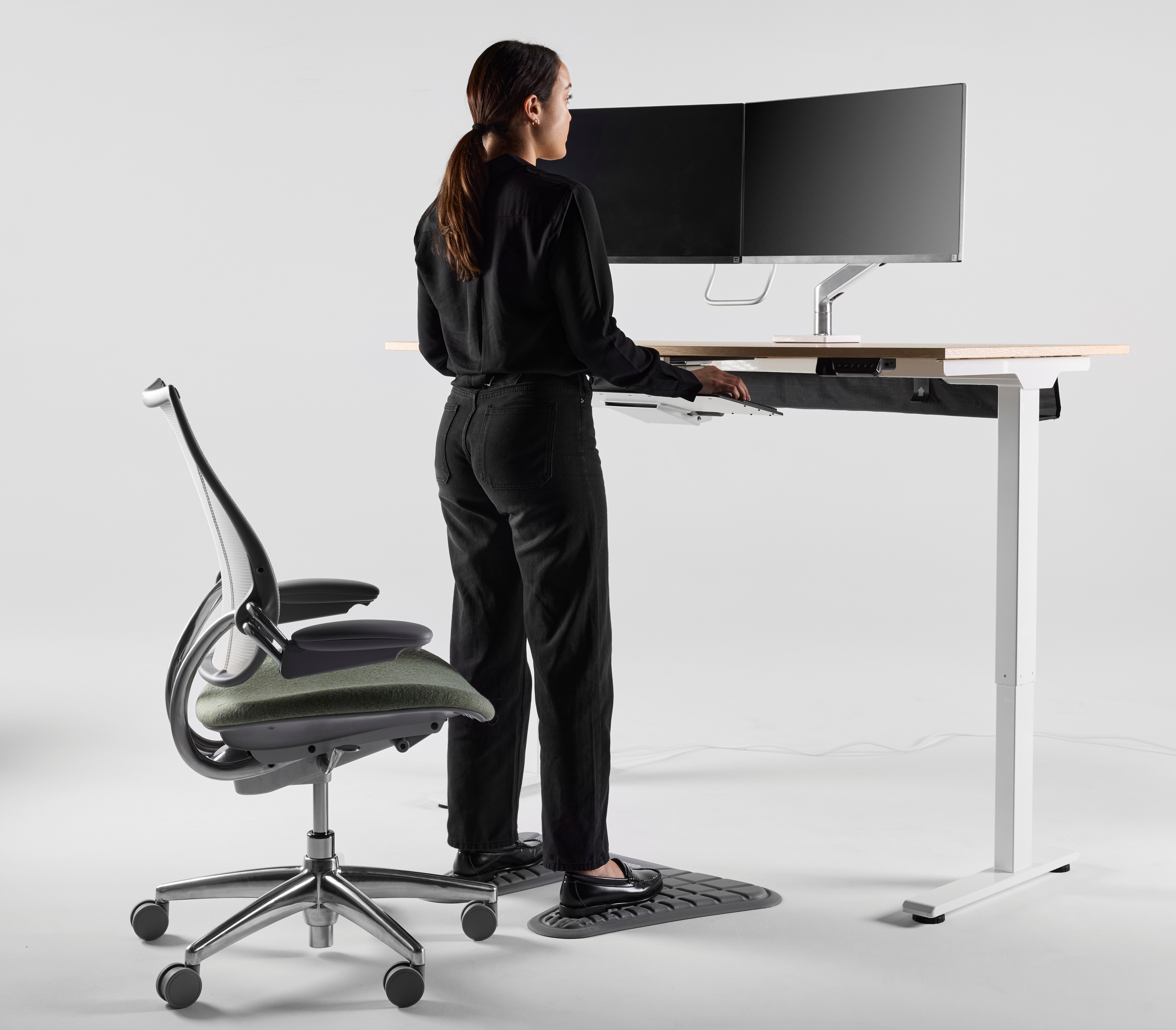
As a result, women often find themselves working in spaces that do not fully support their physical requirements. Fortunately, a few simple adjustments can significantly improve comfort, energy levels, focus and long-term health.
The traditional one-size-fits-all approach to workplace design does a disservice to women. Men and women differ in size, body structure and biomechanics, which means they require different ranges of adjustability-particularly when it comes to work surface height, seating and back support. Despite growing conversations around workplace inclusion, there is still limited evidence that office design standards have evolved sufficiently to account for these ergonomic differences.
Creating more ergonomically supportive work environments benefits both employees and employers. Better workplace ergonomics can reduce the risk of musculoskeletal disorders and repetitive strain injuries, including conditions such as carpal tunnel syndrome, while also improving comfort and productivity. For organizations, the advantages include fewer workplace injuries, lower associated costs, reduced absenteeism, higher employee engagement and improved performance.
Here are four workplace adjustments that can help women work more comfortably and effectively.
1. Use a Height-Adjustable Desk
Height-adjustable desks have become increasingly popular-and for good reason. While they are not a complete solution to workplace health challenges, they offer meaningful benefits, particularly for women.
The standard desk height of approximately 29.5 inches was originally established to accommodate the seated elbow height of a 95th-percentile male. Given that men are, on average, around 5.5 inches taller than women, this standard often places female workers at a disadvantage.
To compensate, many women raise their chairs to match desk height. However, this can create an unsupported or hunched posture while typing, increasing strain on the shoulders, neck and upper back.
An adjustable desk allows users to position the work surface at the correct height for their body dimensions, promoting better posture and reducing discomfort associated with prolonged sitting.
2. Choose the Right Seat Shape
The desk is only part of the equation. The design of the chair itself has a significant impact on comfort and support.
Women have distinct anatomical characteristics, particularly in pelvic structure, body shape and fat distribution. They typically carry more body mass around the hips, thighs and gluteal region, which influences how pressure is distributed while seated.
Research has shown that the distance between the sit bones is generally greater in women than in men. As a result, a one-size-fits-all seat pan design is unlikely to provide optimal comfort for everyone.
Women often benefit from a wider, softer U-shaped seat that better accommodates the hips and distributes pressure more evenly. Men, by contrast, may find firmer, V-shaped seat designs more supportive for their body structure and weight distribution.
The key takeaway is simple: seating should be designed around the user, not the other way around.
3. Look for an Adjustable Backrest
The anatomical differences between men and women extend beyond the seat and influence how the spine is positioned while sitting.
Women generally exhibit a greater forward pelvic tilt when seated, often accompanied by a more pronounced curvature in the lower back. Men, on the other hand, tend to sit with a more backward pelvic tilt and greater lumbar flexion, resulting in a flatter lower back profile.
These differences mean that backrest design and adjustability are particularly important. Women are often better supported by chairs that feature adjustable lumbar support and a curved backrest capable of accommodating the natural shape of the spine.
Combined with an appropriately designed seat, an adjustable backrest can help improve posture, reduce fatigue and enhance overall comfort throughout the workday
4. Rethink Workplace Temperature
Workplace comfort is not limited to furniture. Temperature also plays a crucial role in wellbeing and performance.
Women generally experience office temperatures differently than men due to a range of physiological factors, including metabolic rate, body composition, circulation and hormonal influences.
Hormones such as estrogen and progesterone can affect temperature sensitivity. Fluctuations during the menstrual cycle, the use of hormonal contraception and menopause can all influence how cold a woman feels at any given time.
Interestingly, although women often have a slightly higher core body temperature than men, they can still perceive office environments as colder and less comfortable.
Research has consistently shown that thermal comfort affects concentration and productivity. Environments that are excessively hot or cold can impair performance, while studies suggest that a temperature range between 69°F and 73°F (20.5°C to 23°C) is generally conducive to productive work.
Conclusion
The modern workplace has evolved dramatically over the past few decades, but many office standards still reflect assumptions that do not adequately account for the diversity of today's workforce.
Creating workplaces that accommodate a broader range of body types and ergonomic needs is not simply a matter of comfort-it is a matter of health, inclusion and performance. Adjustable desks, thoughtfully designed seating, adaptable back support and more responsive temperature management can help create environments where all employees can perform at their best.
When organizations invest in ergonomics that work for everyone, the benefits extend well beyond individual comfort. They contribute to healthier employees, stronger engagement and more productive workplaces.